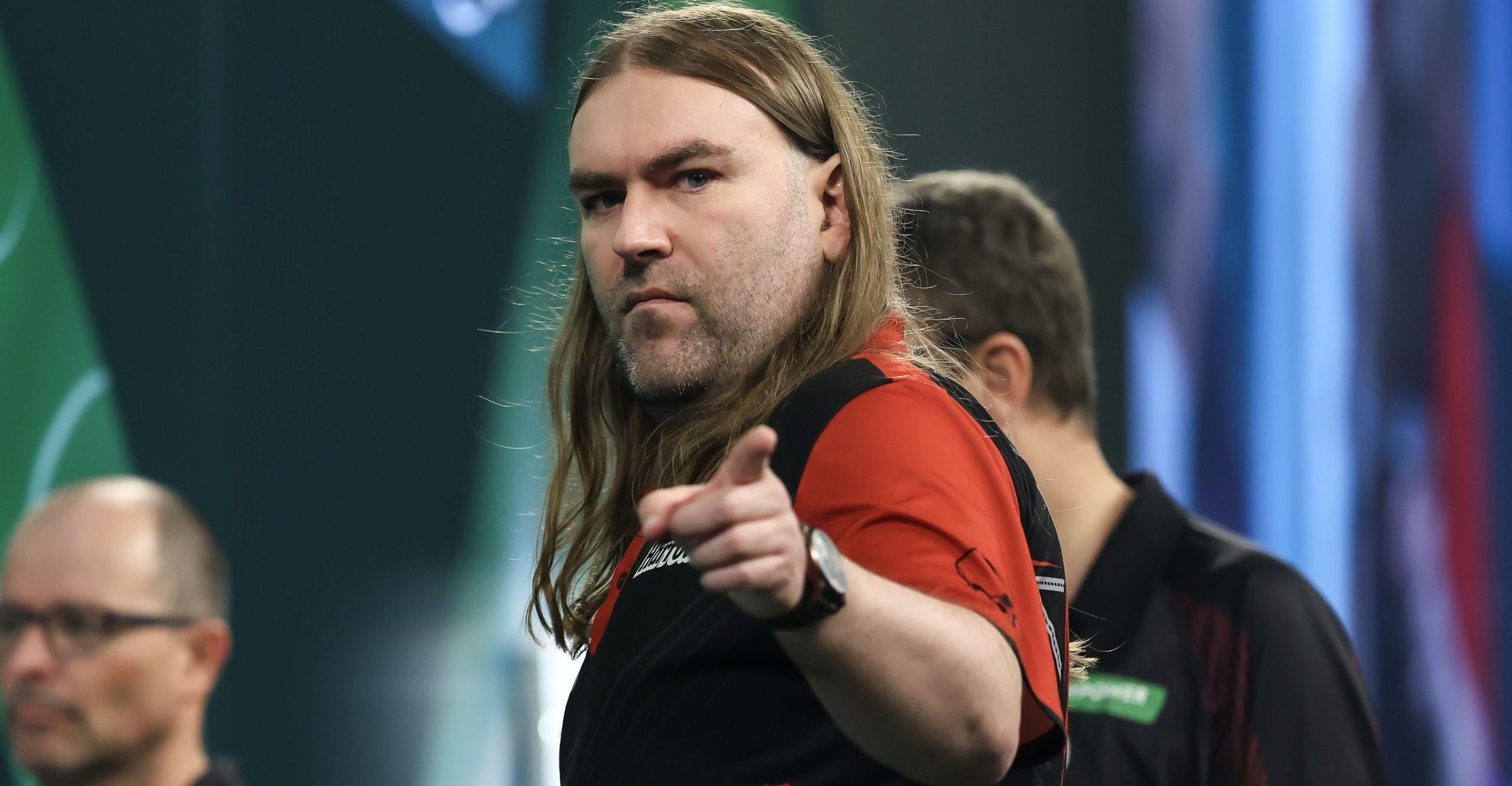
SEARLE SHARES STRUGGLES WITH INCURABLE EYE CONDITION
02/01/2026 By Aaron Nijjar
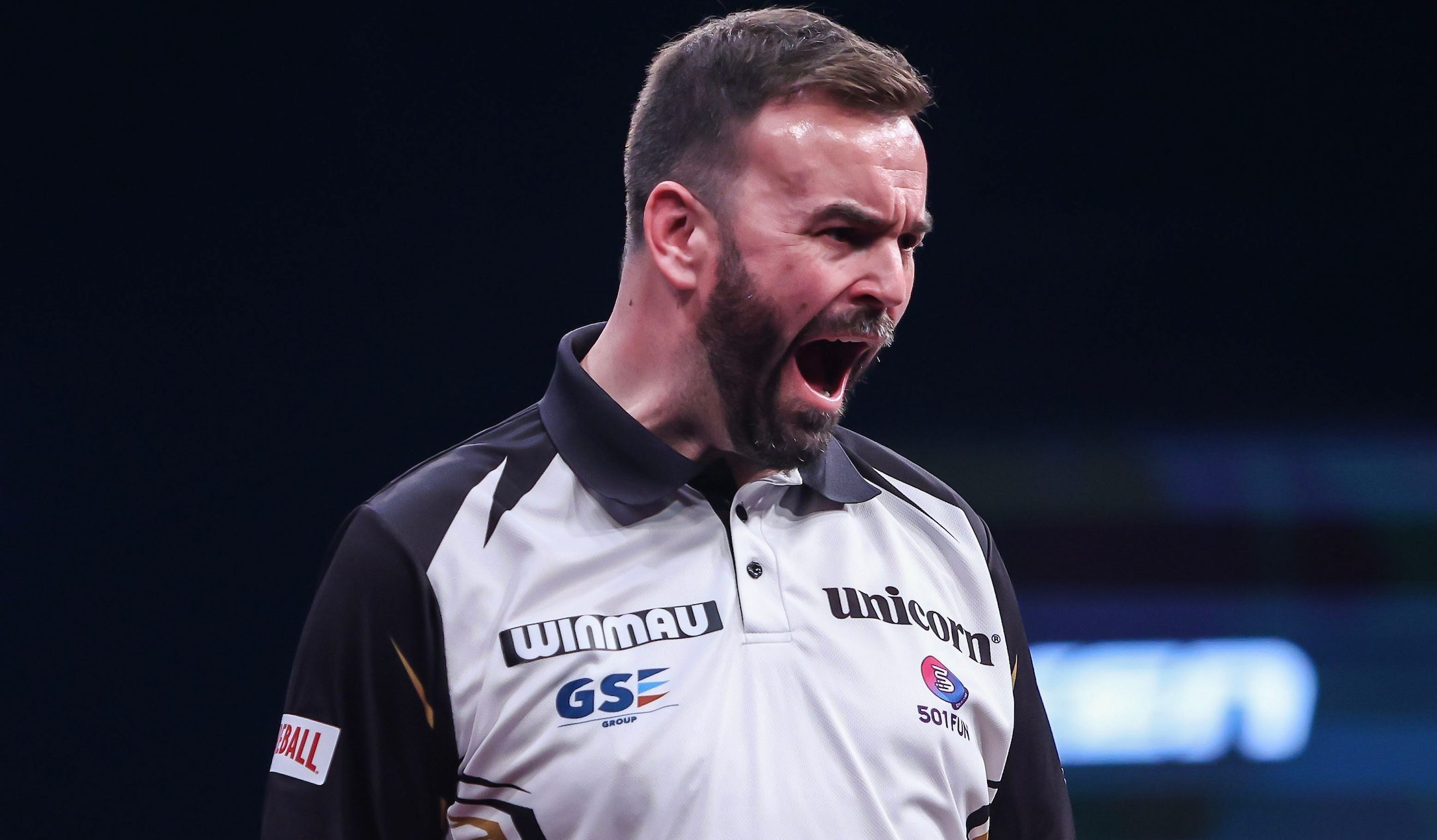
RYAN SEARLE wants to be a role model for people struggling with bad eyesight.
‘Heavy Metal’ produced a clinical 5-2 win over Jonny Clayton, finishing 17 out of 30 doubles to reach the semi-final of the World Championship.
But the Devon thrower revealed that he is managing a diagnosis of the rare eye condition Autosomal Dominant Optic Atrophy, which he received in early 2024.
World No8 Searle would often copy the work of classmates seated next to him in school because he struggled to see what the teacher wrote on the whiteboard.
Searle says there is no cure for the eye condition, which could worsen over time, potentially forcing him to give up driving in the future.
He said: “It was only in the last 18 months that I realised what the diagnosis was for my vision. It’s been bad for as long as I can remember.
“But to have a diagnosis for it is really good and it puts you in that place where you know what’s wrong with your vision.
“There’s no cure for what I’ve got so I’m stuck with it. I wear contact lenses now to try and take a bit of the blurriness away from my vision.
“But sometimes on stage I’m asking the caller what I’ve scored and sometimes I don’t and it puts me in a bit of a difficult position.
“But it’s hard and if I can inspire people that maybe can’t see as well as others to pick up the game and give it a go, then it means a lot to me.
“It can get worse out of nowhere. I’m on the legal limit now to be able to drive so I wear glasses or contacts to be able to drive.
“And if my vision was to get any worse, which it could at any point, then I’d have to find a driver somewhere.
“I’ve always had bad vision. When I was at secondary school, if I used to sit at the back of a class I couldn’t see the whiteboard.
“So when it came to copying things off the whiteboard I’d copy what he was writing. When you can’t see very well you just find ways to get through life.”
Searle’s condition requires him to adjust his positioning during games, often relying on ‘muscle memory’ to execute his shots.
He added: “You know the stage lights, I find it hardest when you’re back-stage in the practice room, it’s quite bright and then you walk back-stage and it’s really dark, you know it’s behind the curtains and whatever else.
“And you sit back-stage and it’s really dark and then you go on stage and it’s really bright again and I feel like it takes me a bit of time for my eyes to adjust.
“That’s something that I’ve always struggled with but I’m not doing bad considering.
“It’d be nice if I can raise awareness about people that don’t have as good a vision as the average person, that’s only a great thing in my opinion.
“I’ve been to exhibitions in the past where people have come up to me and said my vision in one eye is not as good as the other, what do you do to combat that?
“I try and combat that because it’s my right eye that isn’t as good as the left, so I kind of combat that with standing a bit further to the right to try and get my left eye more dominant than the right.
“I’ve tried to pass that on to people. There’s plenty of things, at the end of the day it’s more of a muscle memory thing than a vision thing.
“But it’s a difficult thing and the more awareness the greater it is.
“If I can be an inspiration to people that can’t see very well, then that means a lot to me.”
Unfortunately, Searle’s condition is hereditary, and both his son and daughter are also affected by ADOA.
Off the oche, Searle is actively supporting the Cure ADOA Foundation, which recently received a €15,000 donation from media outlet ViaPlay after learning about the challenges Searle and his children face.
Image by Taylor Lanning.