ASPINALL REVEALS DARTITIS REMAINS DESPITE HYPNOTHERAPY
25/05/2026 By Aaron Nijjar
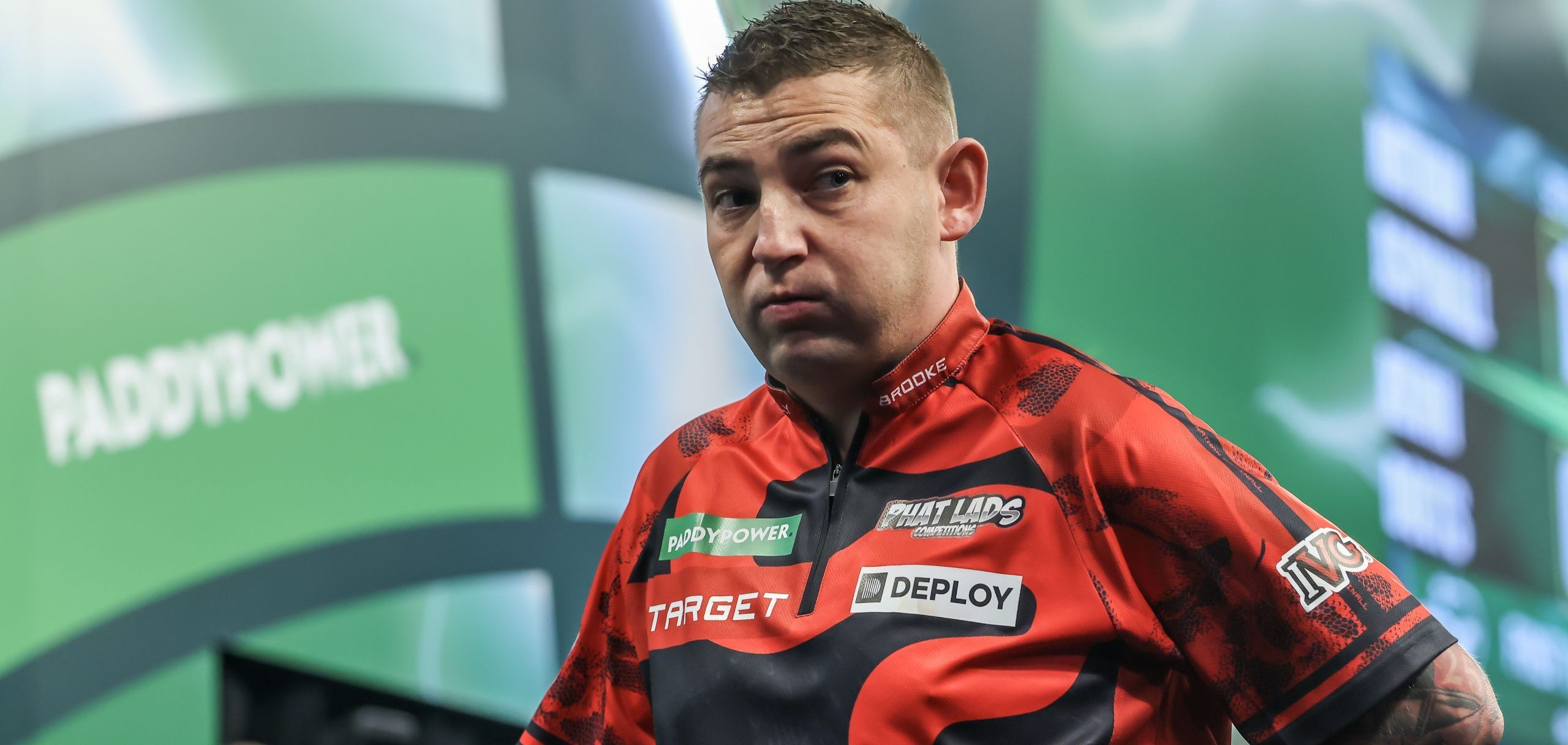
NATHAN ASPINALL says dartitis “isn’t completely gone” from his game.
The Asp has opened up on the mental nightmare that nearly derailed his career, admitting the crippling condition still affects him today.
World No14 Aspinall revealed the terrifying problem began with just one dart refusing to leave his hand.
Aspinall admits pressure and overthinking became impossible to escape whenever he stepped up for a big finish.
He told the Happy Hour Podcast: “Mine was different.
“I couldn’t throw it, but as soon as the first one went, the next two would follow. It was that first dart.
“Don’t miss. I was overthinking it, which is what causes dartitis. I put so much pressure on myself.
“It’s the fear of missing. Some people call it the yips, like in golf. You over-putt. I had that as well. It’s horrible. I’m not going to lie.”
Aspinall explained there are different forms of the condition with some players suffering even more severe symptoms.
He added: “There are ones where you physically just can’t let the dart go and you’re moving with it. That’s what Mark Webster had. That’s the worst one.
“[Jonny] Clayton always gives me stick. He’s like, ‘Have you packed your darts this weekend?’
“That kind of thing. I can laugh about it now, because I’ve still got a bit of it. It’s not completely gone from my game.”
The two-time major winner eventually sought help from sports psychologist Shawn and hypnotherapist Chris O’Connell.
Aspinall reckons the work transformed both his darts career and his life away from the oche.
He continued: “I worked bloody hard. I was doing hypnotherapy twice a week and seeing a sports psychologist once a week.
“Basically, when you have dartitis, you have a panic attack.
“Every time you can’t throw that dart effectively, your brain thinks you’re having a panic attack.
“Why do you have a panic attack? Because you’re anxious, stressed, this, that and the other. That was why I had it.
“We had to work out a way to make me unstressed and clear.
“I am always busy. I do everything at 100 miles an hour. I’ve got this going on, that going on, everything.
“The hypnotherapy was basically trying to clear my head, so I was going into darts not worrying about this at home or that at home. I was going in with a clear head to play darts.
“I was dead sceptical at first. I didn’t believe in it. But for me, he’s amazing. He changed my life.
“It changed my darts, and it also changed me as a person.
“The way I am at home, the way I process stuff, the way I deal with defeat, or an argument with the missus, or the way I deal with my kids. I’m more relaxed and chilled.
“Chris is working with a lot of people on the tour now.
“He got me through my darts. As I say, it’s still there in bits and bobs, but I owe him a lot.”
Aspinall explained he now regularly speaks to the next generation and fears the rise of teenage superstars like Luke Littler is increasing pressure on young players.
He said: “It’s probably the most common question I get asked at an exhibition: ‘Can you help me? I’ve got dartitis.
“The reason the kids have got it is simple.
“They want to be a professional dart player like Luke Littler so quickly.
“That’s it. They’re putting that much pressure on themselves to be good quickly. That’s why they’re getting it, in my opinion.
“The problem now is that, as good as darts is with all these academies, there are 13 and 14-year-old kids playing darts for two or three grand.
“That’s mad! I keep saying to kids: stop worrying. If it’s meant to be, it’s meant to be. Bide your time. Enjoy it. Stop putting pressure on yourself.
“If you’ve got it, just don’t give in. I always say to people: don’t give in. You can beat it.”
Image by Taylor Lanning.